

A template website can cost next to nothing upfront and still cost you serious business over time. The problem is not the price. It is what the template signals to every visitor who lands on your page before they have read a single word of your copy.
Singapore buyers are sceptical by default. Whether they are a small business owner in Tampines looking for a contractor or a procurement manager in the CBD comparing 3 vendors, they will judge your credibility in under 10 seconds. If your website fails that test, they are gone, and they will not tell you why.
Here are 7 ways a cheap website template does that damage, and what you can do about each one.
1. The Template Screams “This Company is New” Before You Say a Word
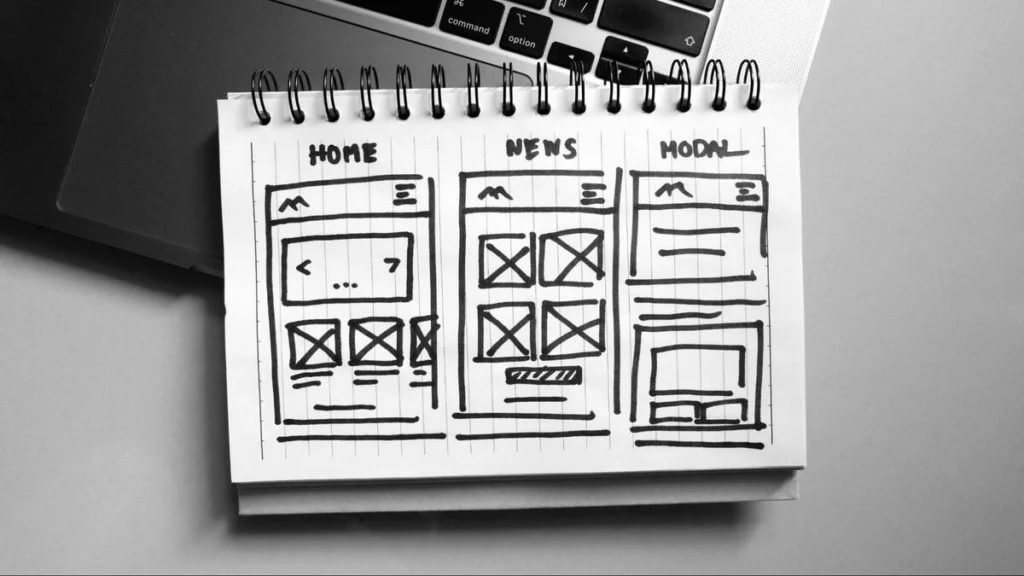
There are roughly a handful of free and low-cost template providers that dominate the market: Wix, Squarespace, Weebly, and a few WordPress theme shops. Their most popular templates have been used by hundreds of thousands of sites. Regular internet users may not consciously recognise them, but they register something familiar in the layout, fonts, spacing, and hero section height.
That familiarity is not brand recognition. It is sameness.
And sameness, for a business trying to communicate that it is worth hiring, is exactly the wrong impression. The effect is worse in Singapore because the local market is small enough that the same template can show up across competitors in the same industry.
If your renovation company looks identical to 3 others a buyer compared last week, there is no rational reason for them to choose you over price alone.
A custom website design, even a simple one, signals intentionality. Someone made deliberate decisions about what this brand looks like, what it says first, and how it guides a visitor toward making contact.
That decision-making is visible in the result, and buyers register it, even when they cannot articulate why one site felt more credible than another. The template bypasses all of that by putting your business into a pre-built mould designed for mass appeal, which is the opposite of what differentiation requires.
2. Generic Stock Photos Undermine Your Credibility Instantly
Templates are sold with placeholder images, and most businesses never replace them properly. A photo of a suited model shaking hands in a glass office, or a smiling call-centre team that could be from any stock library, tells the visitor that your website is not about your actual business.
Real Singapore customers notice when the people in your photos do not look like they work here.
They notice when a property company uses a skyline shot of Hong Kong. They notice when a food business uses photos that look nothing like the food that will actually arrive.
The gap between stock imagery and your real product creates doubt. If the website looks assembled rather than designed, buyers assume the product or service might be the same.
The fix is not expensive photography for every page.
Even mobile phone photos of your actual team, your actual workspace, or your actual product, used consistently, outperform polished images of strangers. Authenticity converts better than production value at the consideration stage, because buyers are not evaluating your photography budget. They are evaluating whether your business is real, active, and capable of delivering what it says it delivers. Stock imagery signals none of those things.
3. The Layout is Designed for Any Bbusiness, So It Works Poorly for Yours
Templates are built to be flexible. A template that works for a yoga studio should also work for an accounting firm. That flexibility is the problem: it is optimised for neither.
The typical result is a homepage that leads with a hero image and a generic headline, then a 3-column features section, then a testimonials row, then a contact form. Every business following that structure is competing on identical ground.
More practically, the template’s layout probably does not reflect how your customers actually make decisions.
A B2B industrial supplier needs buyers to find product specifications quickly. A renovation contractor needs to lead with project photos. A tutoring centre needs to show exam results and class schedules immediately.
A template that puts all of these businesses through the same flow treats a buyer looking for a quote the same as someone exploring for the first time. That mismatch costs you enquiries every day, invisibly, because the visitor who could not find what they needed in 10 seconds simply left and tried someone else.
When the layout does not match the buyer’s intent, they leave. Most do not spend very long looking.
How layout priorities differ by business type
| Business type | What buyers look for first | What generic templates lead with |
|---|---|---|
| Renovation contractor | Portfolio photos, past projects | Hero banner + tagline |
| B2B equipment supplier | Product specs, certifications | About the company |
| Tutoring centre | Subject coverage, results, schedule | 3-column feature icons |
| Professional services (legal, accounting) | Credentials, team, pricing signals | Contact form |
| F&B / retail | Menu, location, operating hours | Welcome message |
4. Mobile Performance on Templates is Often Poor, and That is Where Most of Your Visitors Are

Template providers claim their themes are mobile-responsive. Most are, technically: they will reflow to fit a smaller screen.
But there is a difference between a website that does not break on mobile and one that is actually designed for mobile use.
On a template, the mobile version is usually an afterthought. Columns stack on top of each other in an order that makes no sense. Images that looked fine on a desktop are cropped awkwardly on a phone. CTA buttons that were prominent on a wide layout disappear to the bottom of a long scroll, below content that the visitor has already lost interest in by the time they get there.
In Singapore, mobile traffic accounts for the majority of web sessions for most consumer-facing businesses. WhatsApp is how people make enquiries. If a visitor cannot find your WhatsApp link within 3 seconds on their phone, most will not scroll to find it. They will try the next result.
Google also uses mobile performance as a ranking signal. A template that scores poorly on Core Web Vitals will rank lower than a properly optimised site for the same keyword, even if your content is better.
5. No Pricing Information Drives Buyers Away, and Templates Make This Worse
This is not strictly a template problem, but templates make it worse because they rarely include pricing sections and most template users do not add one.
Singapore buyers research online before they contact anyone. If your website offers no indication of cost, not even a price range, not a starting-from figure, not a packages table, a significant portion of potential customers will assume you are too expensive and move on.
The ones who do contact you without that context often have budget expectations that do not match yours. Those conversations waste time on both sides, and they happen repeatedly when pricing is absent from the site. A custom website design makes it straightforward to build pricing signals into the flow naturally, positioned where a buyer is ready to receive them. A template makes it awkward: you end up shoehorning a pricing section into a layout that was not designed for it, or skipping it altogether.
The businesses that convert best from web traffic are the ones that give buyers enough information to self-qualify before they tap the WhatsApp button.
6. Template Sites Often Have Weak On-page SEO Out of The Box
Ranking on Google requires more than just having a website. It requires proper heading structure, meaningful meta titles and descriptions, fast load times, properly compressed images, clean URL structures, schema markup for local businesses, and internal linking that helps search engines understand what each page is about.
Most template websites are built with none of this in place.
Default meta titles are often the business name followed by the page name. Images are uploaded at full resolution with no compression and no alt text. URL structures are auto-generated and rarely cleaned up.
For a business in Singapore competing for terms like “interior designer Singapore” or “IT support company Singapore”, starting from a poorly configured template means starting several steps behind competitors who either had a developer set up their site properly or used a platform with better defaults.
The financial logic gets overlooked here.
The upfront savings on the template are visible and immediate. The ongoing cost in missed traffic is diffuse and invisible: you never see the leads that went to page 1 competitors because your site ranked on page 3. A well-built custom website on page 1 brings in more enquiries in a single month than a cheap template site does in a year.
That gap compounds. SEO is not a one-time benefit; rankings that hold bring consistent traffic without ongoing ad spend. The template’s cost saving at launch is real, but it is almost always smaller than the revenue gap it creates over 12 to 24 months of underperformance.
7. The Design Signals What Tier of Business You Are In

Every website communicates a price point before a buyer reads your rates. Visual design, typography, the quality of images, how content is laid out, how copy is written: all of it adds up to an impression of where your business sits in the market.
A template website with default fonts, inconsistent spacing, and stock imagery sends a specific message. It says this business is either new or not yet serious enough to invest in its own presentation.
For businesses selling products or services priced above the low end of their market, that mismatch is expensive.
A wedding photographer charging $3,000 and above cannot afford a website that looks like it belongs to someone charging $800. A law firm, an architecture practice, a high-end renovation contractor: any business that sells on quality rather than on being cheapest will lose sales to competitors whose websites better match the price they are asking.
Buyers are not just looking at what you offer. They are looking for signals that you are competent, established, and worth what you charge. Your website is one of the strongest signals available before they make contact, and a template that was designed for mass flexibility gives them a signal you almost certainly did not intend to send.
What To Do If You Find Your Website In This List
Not every template website has all 7 of these problems, and not every custom-built site avoids them. What matters is whether your current website is doing its job: turning visitors into enquiries.
A few questions are worth asking.
Do you know your current website’s bounce rate? Do you know how many visitors reach your contact page compared to your homepage? Are you receiving enquiries roughly in proportion to your traffic, or is there a gap?
If the gap is there, the website is the first place to look.
A professional web design does not have to cost a large sum upfront. What it does require is intentional decisions: about layout, about mobile performance, about how pricing is communicated, about what a buyer needs to see before they are ready to contact you.
If your current site was built quickly and cheaply and you have never revisited it, it is probably costing you more in lost business than a redesign would. The template saved money once. The question is whether it is still saving you money now, or whether it is spending it.